This can result in the application using more and more memory over time, potentially leading to degraded performance and even crashing This comprehensive guide provides practical techniques for identifying, diagnosing, and preventing memory leaks in your python code In this article, we will explore how to diagnose and fix memory leaks in python.
Causes of Memory Leaks in Python | How to Avoid Them?
The tracemalloc module is a debug tool to trace memory blocks allocated by python
It provides the following information
Traceback where an object was allocated statistics on allocated memory blocks per filename and per line number Total size, number and average size of allocated memory blocks compute the differences between two snapshots to detect memory leaks to trace most memory blocks. Have a look at this article Tracing python memory leaks also, note that the garbage collection module actually can have debug flags set
Look at the set_debug function Additionally, look at this code by gnibbler for determining the types of objects that have been created after a call. In the world of python programming, memory management is a crucial aspect that can significantly impact the performance and stability of applications A memory leak, a common issue in programming, occurs when a program fails to release memory that is no longer needed
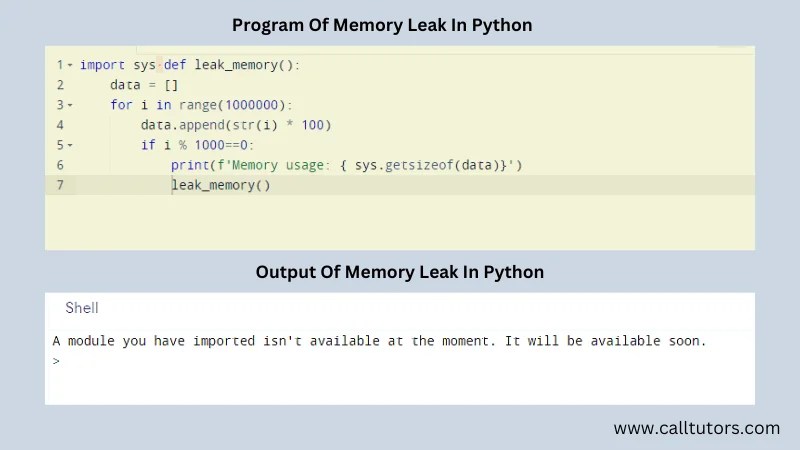
In python, while the language has an automatic garbage collector to manage memory, memory leaks can still happen due to various.
Python is a popular programming language known for its simplicity and ease of use However, like any other programming language, it is prone to errors such as memory leaks Memory leaks can cause a program to consume more memory than necessary, leading to slow performance, crashes, or even system failure Therefore, it is crucial to identify and fix memory leaks in python programs.
Memory leaks occur when a program incorrectly manages memory allocations which resulting in reduced available memory and potentially causing the program to slow down or crash